The UnYes Movement
The Unbreakable Bond and the Broken System
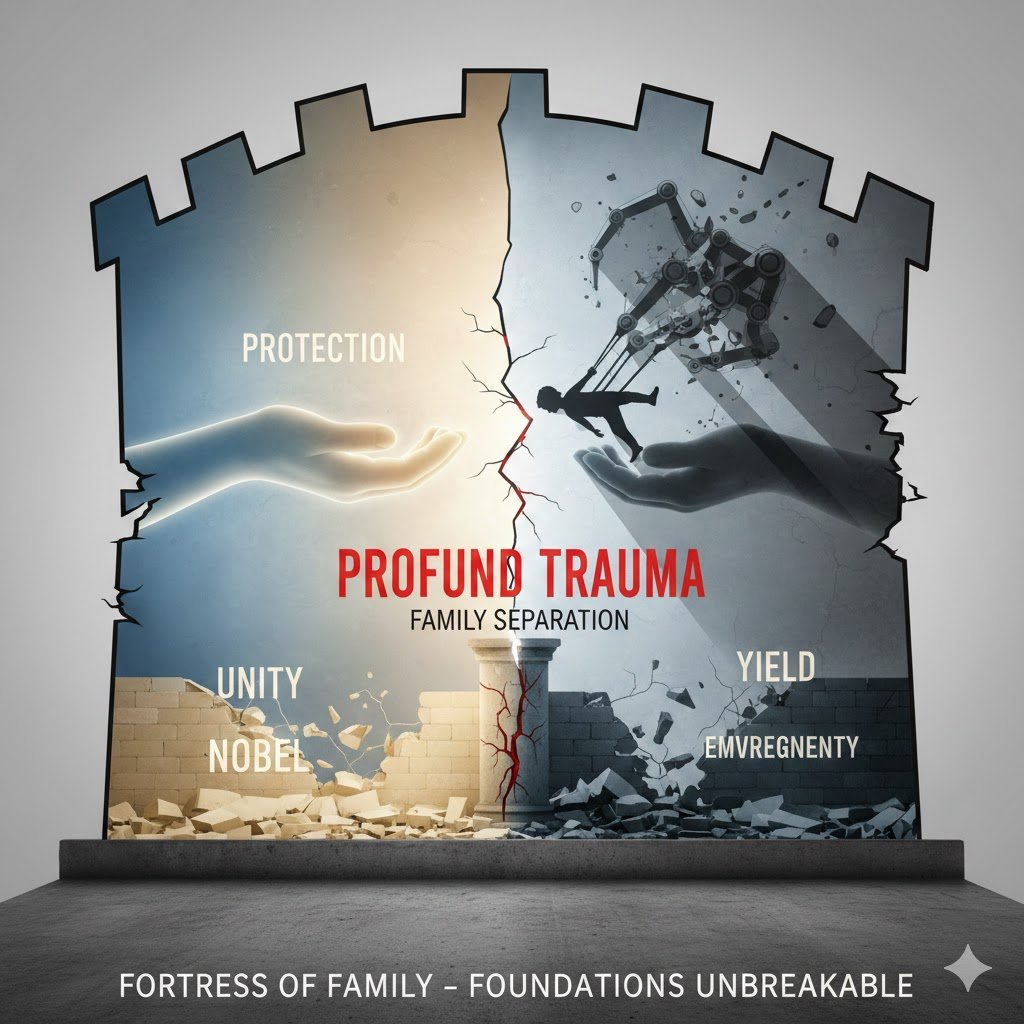
The American child welfare system is founded on a central, profound tension: its stated mission to protect children often stands in stark contrast to the profound trauma it inflicts through family separation. While claiming to rescue children from harm, the system’s interventions can create new, lasting wounds by attempting to erase the most fundamental human connections. This policy paper uses the powerful narrative of five sisters—Unity, Nobel, Yield, Empower, and Sovereignty—to illuminate this failure and propose a new, humane, and effective framework for reform. Their story is a testament to the fortress of family, whose foundations can remain unshakeable even after the walls are destroyed.
The five UNYES sisters were scattered across states and continents—from Oklahoma and California to Zambia—their connections systematically erased by a system that prioritized logistics over love. But that bond was not a passive fact; it was an active, relentless pursuit. It was a promise whispered in the dark: I would find Unity. Would find Nobel. Would reconnect with Yield. Their story is not an anomaly but an emblem of a core systemic flaw: the failure to recognize that for a child removed from their home, a sibling bond is not a secondary consideration but a primary, life-sustaining relationship.
The purpose of this paper is to articulate a three-pillar vision for child welfare reform, born from lived experience and aimed at systemic transformation. This framework is built upon:
Preservation: Mandating the unity of sibling groups.
Prevention: Shifting from a reactive crisis model to a proactive family support model.
Perspective: Centering the voices and expertise of those who have experienced the system firsthand.
This vision, the UNYES Promise, transforms personal pain into a public mandate for change. To understand why this reform is so urgently needed, we must first examine the deep-seated systemic failures that continue to devalue and destroy the bonds that are most essential to a child’s healing and identity.
A Systemic Failure: Devaluing Sibling Bonds
To build a better child welfare system, we must first understand how the current one is broken. The systematic undervaluing of sibling relationships is not an occasional oversight but a foundational flaw in the system’s design and practice. For decades, policy has been built around the individual child as a unit, failing to recognize that these children exist within a fortress of familial bonds—a fortress that is critical to their identity, stability, and resilience.
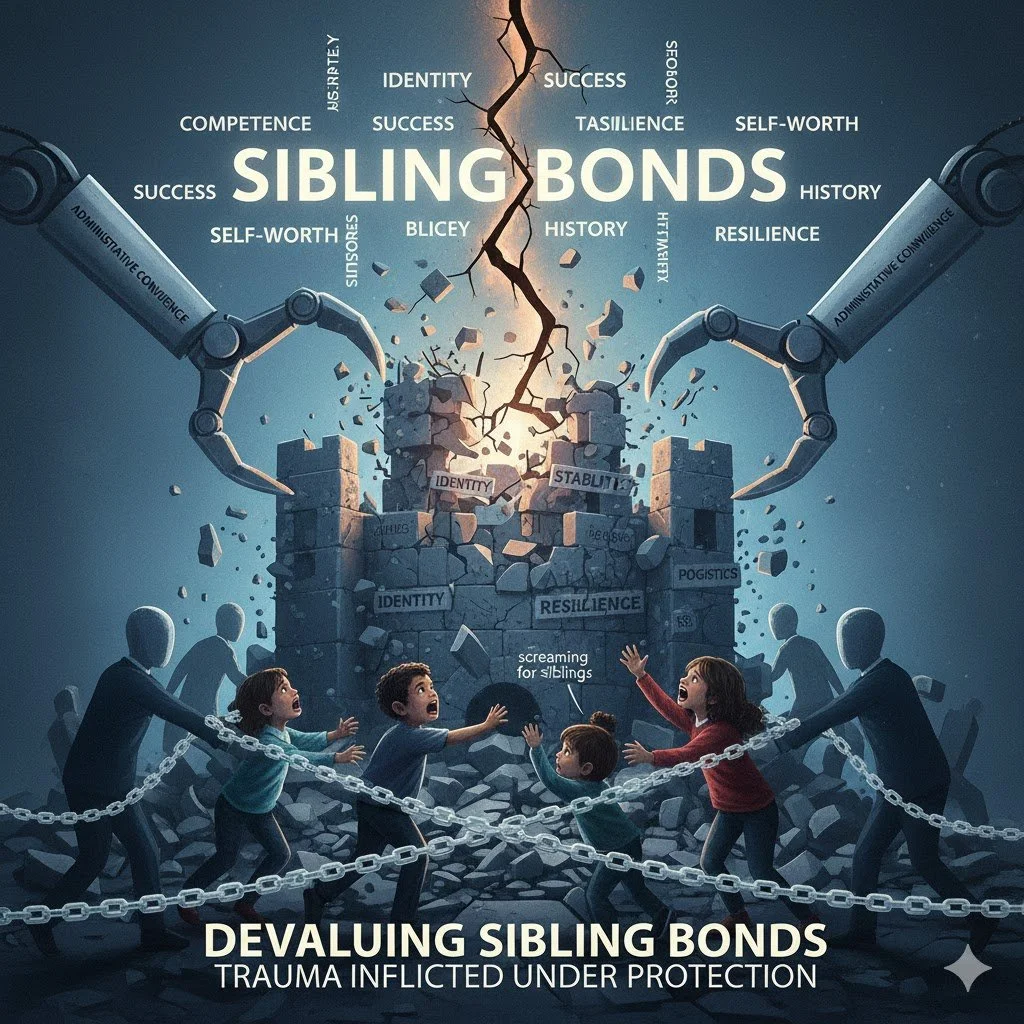
The system consistently prioritizes administrative convenience over the profound psychological needs of children. This is a policy decision made visible in the heartbreaking image of children "screaming for siblings at airports while adults held them back." Such moments are not merely sad anecdotes; they are the direct result of policies that inflict deep, lasting trauma under the guise of protection. By treating sibling bonds as secondary considerations, the system attacks a child’s fortress against the world, denying them their most immediate source of comfort and continuity in a time of overwhelming crisis.
The consequences are devastating. For children who have survived parental failure, the sibling bond is often the only place their competence, success, and self-worth are forged. It is where they have succeeded at impossible tasks while adults have failed at their basic responsibilities. When the system actively works to erase that connection, it takes more than a family member—it takes a piece of a child’s identity, the primary record of their own history, and the very evidence of their own strength. It was this devastating realization that gave birth to a promise. The system that had separated us had to change. It had to recognize that sibling bonds were not secondary considerations but primary relationships. It had to prioritize keeping siblings together. It had to stop traumatizing children while claiming to protect them. It had to listen.